Chapter Two: The Bear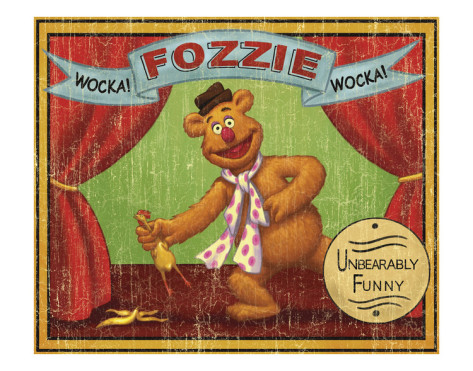
They had come to see him, once. The El Sleezo was positioned precisely in the middle of nowhere, the single source of life and light for miles around, so when the harvest went well, or a party of sellswords passed by with their pockets swollen from plunder, it was the only place to drop a few coppers. And the bulk of that bounty went not to the whores, nor even to pay for ale, but to show appreciation for the furry farceur who occupied the stage. Every king has a jester—but The Bear was jester to all and made each miller and shepherd feel like Aerys Targaryen himself—and such men are generous. Even now he could hear it—the laughter and the sharp clatter of copper on wood as the crowd rained its approval upon him.
And the women! Some nights he had one from each of the seven kingdoms. A lord could have whoever he wanted—that was the gift of a title; but The Bear won them through wit alone. Tonight in the darkness of his dressing room, their faces rushed by in a flood of memory: the merchant’s daughter with lusty green eyes from the Summer Isles, the courtesan-in-training from Lys with small high breasts and dark nipples, girls who shrieked and giggled and girls who wiggled in bed like eels beneath his furry bulk. The Bear was a clown, it’s true, but he also was a bear, and had a bear’s appetites. He would feast at that endless buffet by night, sleep until show time, do his set and feast again. Those memories carried him through these darker days when all he had was his left paw for company—that, and the flask of milk of the poppy he kept hidden beside the mirror in his dressing room.
The El Sleezo still entertained sellswords and farmers, but they were less discerning now, a mob, not a crowd and certainly not an audience. Their eyes were hard, and they had no love for The Bear’s knock-knock jokes and riddles, or the way he said wocka wocka wocka. Not even for his comic coup de grace, a pair of costume spectacles attached to a grotesquely large false nose, made even funnier (as if the nose were not enough) by the bushy horsehair moustache and eyebrows he had attached. That, plus the trick arrow cunningly designed to appear as if it went through his head, should have driven any thinking creature into gales of hilarity. But since when did men like these think? These days, they came mainly to bellow coarse come-ons and grab a handful of poxy showgirl arse—but the girls were off tonight, and the crowd would not be pleased.
Except, of course, for when they called for the song. The song: that leering and obscene ditty, a catalog of vile and physiologically improbable interspecies acts. It was the only thing he did onstage that still pleased the crowd, but it was a personal affront as well, the death of whatever dignity he had left– and how the mob howled at his disgust! They laugh at me, he thought, but not with me. Gods, is this to be the rest of my life? Father, why did you–
“..the Harlequin of Highgarden…the Quipster of Qarth…’ The Bear felt a familiar heartsickness as, from offstage, he heard himself introduced. He took a swig of milk of the poppy, welcoming its bitter tang and the instant rush of dreamy numbness, sleep and oblivion to follow shortly on its heels. It’s show time, he whispered; then he checked himself in the mirror, donned an ancient fedora ornamented with a pin in the shape of a stag, and headed to meet the crowd.
The hoots of the audience crashed over him like a wave of something sticky and unpleasant, and the stage lights shocked his eyes with stabs of pain, angry and red—it was always that when he was on the poppy. But The Bear ignored it, and stepped into the familiar routine.
“Wocka wocka wocka wocka!! You’re a great crowd! Thank you! Thank you! And thank you!” Front and center, he leaned into the mic and made the stage his own.
““ Wocka wocka wocka! Here I am, Fozzie Bear, to tell you jokes both old and rare!”
He did a couple of awkward dance steps and made gestures with a rubber chicken.
“Sing the song,” shouted the crowd.
The Bear ignored their baiting and launched into his act.
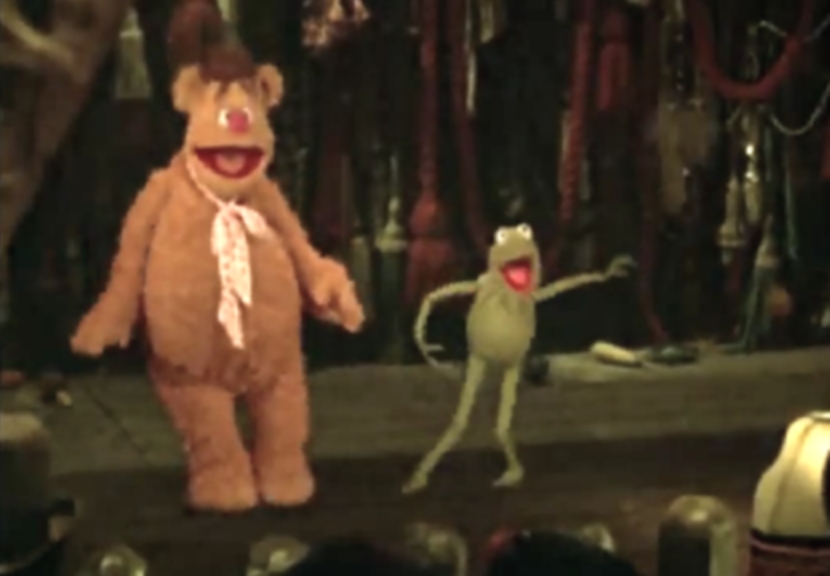
“Let’s start the show off with a bang,” he began, and was obliged with a volley of musket fire that seemed intended to kill him as much as to drive him from the stage. “Sellswords,” he thought, “so literal”; but the sudden threat had thrown out of his routine. He stalled for a moment, keeping the silence at bay with a few more wocka wockas, but the milk of the Poppy had slowed his thinking, and he could not remember his next joke. The crowd watched him with hungry eyes, waiting for his next misstep. One face in the crowd, however, was not twisted with cruel mockery. Bright green with bulbous white eyes, the frog showed concern but not contempt. It was the face of someone who recognized, perhaps, a brother in the arts and a fellow traveler. Acceptance radiated from those eyes, so very much like ping-pong balls cut in half and decorated with magic marker. But the frog was but one in crowd, and the rest demanded their entertainment. The Bear searched his mental catalog for a something to get the show back on track.
“I knew a sailor who was so fat,” began The Bear.
Purple bearded and obese, a Tyroshi pirate stood and smashed his bottle on the table before him, brandishing the jagged end at The Bear. “How fat was he?” the sailor asked, ready for a fight.
“He was so fat that everybody liked him, and there was nothing wrong with him at all,” answered The Bear in a single breath, cursing himself for his cowardice. It was irresponsible to say that there was nothing wrong with the fat sailor of the riddle; obesity, he had heard, had all sorts of consequences. But then the crowd began chanting “The song! The song!” again, and The Bear decided, in that moment, that tonight he would refuse to sing it.
“I forgot the song,” cried The Bear. Wouldn’t you rather see me do some tricks with cigar boxes?”
“The song!”
“What song,” asked The Bear, playing dumb.
“The Bear! The Bear and the Maiden Fair!”
“I don’t know it,” protested The Bear.
“Sing the song, or you’ll be singing through your liver,” they cried, not exactly knowing what it meant.
“Folks, I tell you-I don’t know it. I’ve forgotten the song.”
“What about “The Bear and the Froggy Fair?”
Like Valyrian steel through a lamprey pie, the voice cut through the crowd. The Bear looked down to see the frog at the foot of the stage, staring up searchingly. “Do you know that song?” it asked, and reached up with a flipper. The Bear bent to take the proffered limb and lifted the frog to stand beside him; such a light creature, he noted, to have such gravity. “I don’t,” he said, “but I’ll bet we can make one up.”
“That’s just what I was thinking,” said the frog.
Suddenly, The Bear realized he didn’t even know his savior’s name. “I’m Fosworth Bearatheon,” he offered.
“Kermit the Stark,” the frog replied, then turned to the piano player. “Maestro,” he prompted.
The music started, and they began to sing.